Reducing CPA from £37 to £11 and Improving ROAS from 3.2x to 9.2x
Project Overview
This project focused on improving Performance Max campaigns for a private healthcare brand, Imaginatal, offering pregnancy scan services across multiple UK locations.
The campaigns were already running but the messaging, creative assets and campaign setup needed to be more accurate, more local and more aligned with the actual services. Some ads felt too generic for a sensitive, location-based service where trust, clarity and reassurance matter.
I started with one campaign first: Oxford. This allowed us to test the changes carefully before applying the same approach to other locations.
I improved the campaign by rewriting the headlines, long headlines and descriptions, using real brand images, video, improving search themes, fixing location assets, adding campaign-level sitelinks and structured snippets and turning off settings that reduced control over the final ad experience.
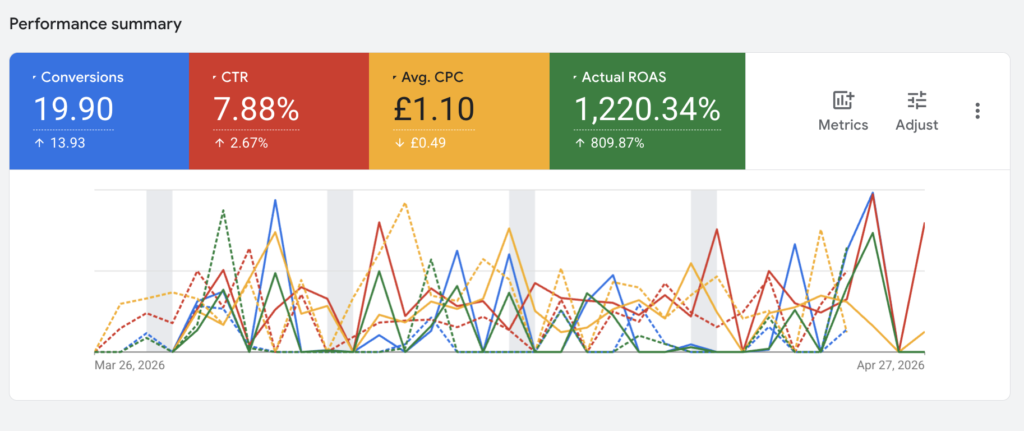
The Oxford test showed a strong improvement, reducing CPA from £37 to £11 and improving ROAS from 3.2x to 9.2x. After that, the same approach was applied across other location campaigns, where combined performance also improved.
This case study shows how better campaign inputs, stronger local relevance and clearer service messaging helped improve PMax performance.
Note: No customer or patient data is included in this case study.
The challenge
The campaigns were already active but they were not making the best use of what the company actually offers.
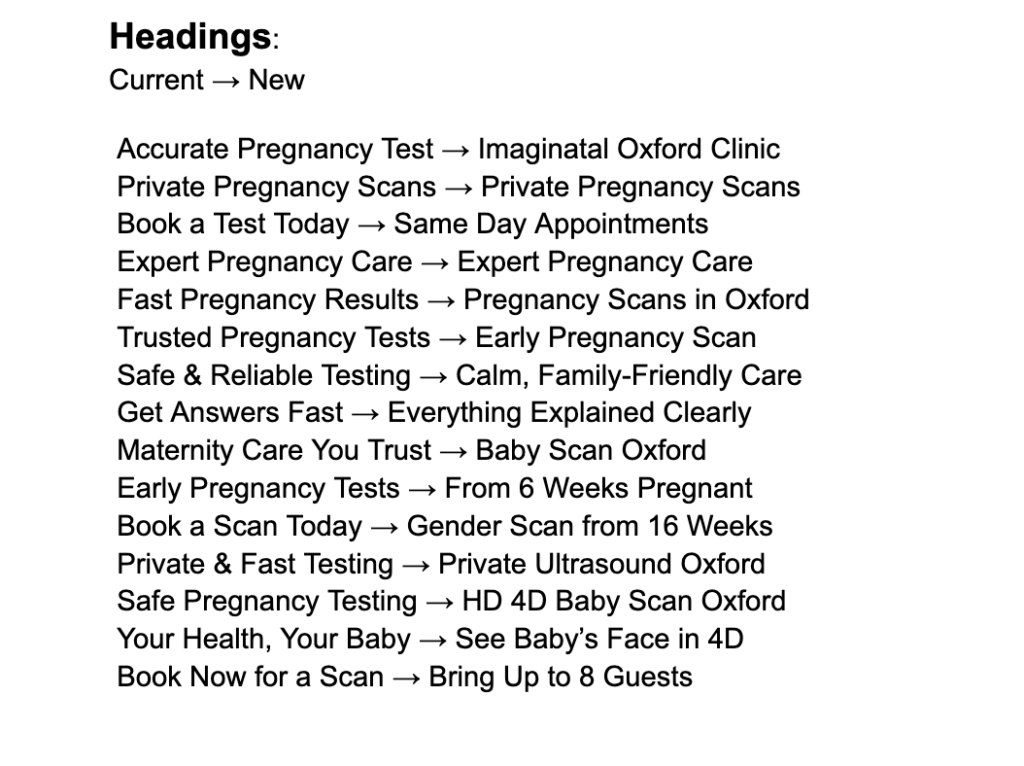
The messaging felt too generic for a location-based pregnancy scan service. Some headlines and descriptions focused on broad terms like “pregnancy tests”, instead of clearly reflecting pregnancy scans, private ultrasound services, early scans, gender scans and the experience at each clinic.
For this type of service, accuracy matters. People searching for pregnancy scans are often looking for clear information, reassurance and a trusted clinic near them. The ads needed to feel more specific, more local and more connected to the real services.
There were also campaign setup issues that reduced control. Some assets were automated, final URL expansion was active, search themes were limited, and some location assets were not matching the right clinic in ad previews.
The main challenge was to improve the campaigns in a controlled way. Instead of making random changes across every location, we needed to make the ads more relevant, more accurate and more aligned with the brand, then test the impact before applying the same approach to other campaigns.

Key issues I focused on
- Generic ad copy that did not fully reflect the services
- Some messaging focused on “tests” instead of scan-led intent
- Stock images instead of real images from the company
- Very limited search themes
- Location asset issues in ad previews
- No campaign level sitelinks and structured snippets
- Automated assets and URL expansion reducing control
- Campaigns needed stronger local relevance and clearer service messaging
My strategy
We did not want to change every campaign at once.
The first step was to choose one campaign, improve it properly and then assess the results before making changes across other locations. For this, I started with the Oxford PMax campaign as a test.
Before changing the campaign, the most important part was understanding the brand, the services and the target audience properly.
Because I was already working on the company’s website, SEO and landing page copy, I had a strong understanding of how the brand speaks, what the services include and what customers usually care about before booking. I had also spent time understanding the clinic experience, so the campaign messaging could be more accurate and more connected to the real service.
This helped me move away from generic pregnancy ad copy and focus on what actually mattered to the audience: scan type, location, timing, family-friendly care, reassurance, and language the audience would actually use.
What I changed
The focus was on giving PMax better inputs: clearer messaging, stronger creative assets, more relevant signals and better control over the campaign experience.
Messaging
The headlines, long headlines and descriptions were rewritten to feel more service-led, location-specific and closer to how the audience actually talks.
Creative assets
Generic stock images were replaced with real brand and clinic images, making the ads feel more trustworthy and closer to the real clinic experience.
Search themes
More relevant search themes were added around the services and user intent, while keeping the wording accurate and appropriate for a sensitive healthcare service.
Location relevance
Each campaign was matched with the correct clinic location assets so location details were more accurate and relevant to the user.
Campaign control
Final URL expansion and automated assets were turned off to keep better control over landing pages, messaging and brand accuracy.
Sitelinks and structured snippets
Campaign-level sitelinks and structured snippets were added to make the ads more useful and service-specific, instead of relying only on general account-level assets.
Videos
Relevant video assets were added to give the ads more context and help users get a clearer feel for the scan experience
Oxford Test Results
Oxford was the first campaign we used to test the new approach.
The aim was to see whether stronger messaging, more relevant assets, better search themes and tighter campaign control could improve performance before rolling the changes out to other locations.
To keep the comparison fair, I compared one month before the changes with one month after the changes.
| Metric | Before | After |
| CPA | £37.10 | £11.16 |
| ROAS | 3.2x | 9.2x |
| Conversions | 5.01 | 16.55 |
| Conversion rate | 4.24% | 9.76% |
| CTR | 5.21% | 7.26% |
| Avg. CPC | £1.59 | £1.09 |
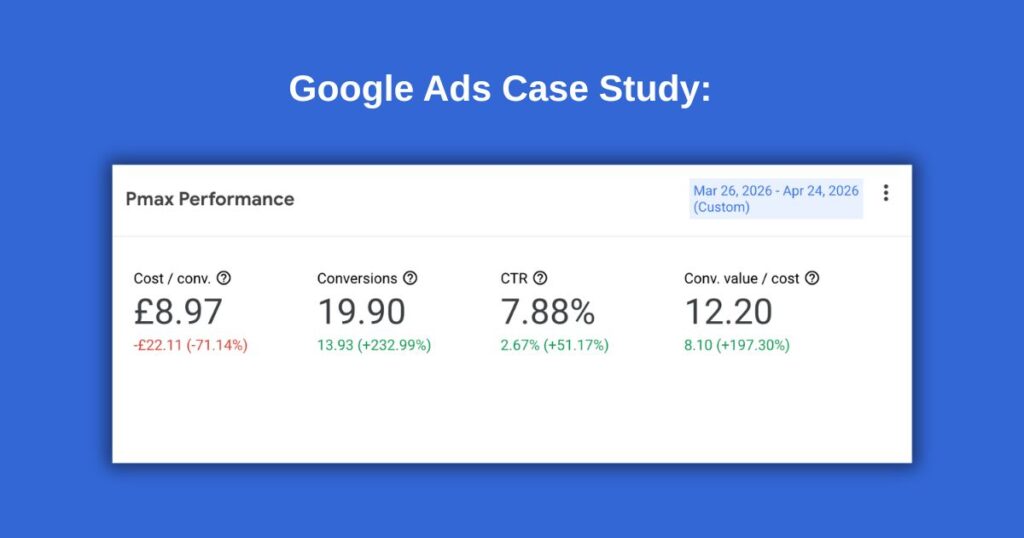
The Oxford test showed a clear improvement. With almost the same spend, the campaign generated more conversions, a higher conversion rate, lower cost per conversion and stronger ROAS.
Key improvements
- CPA reduced by around 70%
- ROAS improved from 3.2x to 9.2x
- Conversions increased by around 230%
- Conversion rate more than doubled
- CPC reduced from £1.59 to £1.09
- CTR improved from 5.21% to 7.26%
This gave us enough confidence to roll out the same approach across other pregnancy PMax campaigns.
Applying the same approach to other locations
After the Oxford test showed a clear improvement, we applied the same approach to other PMax campaigns across different clinic locations.
The idea was not to copy the same ads everywhere. The structure stayed consistent but each campaign was adjusted for its own location.
Results across other locations
Across the other pregnancy campaigns, performance also moved in a positive direction.
To keep the comparison simple, I looked at performance before and after the changes across all location campaigns.
| Metric | Before | After | Change |
| Clicks | 1,138 | 1,597 | +40% |
| CTR | 5.77% | 7.48% | +30% |
| Avg. CPC | £1.01 | £0.78 | -23% |
| Conversions | 71.58 | 134.31 | +88% |
| Conversion rate | 6.29% | 8.41% | +34% |
| CPA | £16.06 | £9.24 | -42% |
| ROAS | 6.8x | 10.8x | +58% |
Key improvements
- Conversions increased by around 88%
- CPA reduced by around 42%
- ROAS improved from 6.8x to 10.8x
- CTR improved from 5.77% to 7.48%
- Average CPC reduced from £1.01 to £0.78
- Conversion rate improved from 6.29% to 8.41%
The combined results showed that the same approach worked across multiple location campaigns, with more conversions, lower CPA and stronger ROAS.
Outcome
This project showed that PMax performance depends heavily on the quality of the inputs.
The biggest improvement came from making the campaigns more accurate: clearer service messaging, stronger local relevance, real brand assets, better search signals and more control over what users saw.
It also showed the value of testing first. By improving one campaign, monitoring the result, and then applying the same thinking across other locations, the changes were made with more confidence and less risk.
For me, the main takeaway was simple: good Google Ads work is not just about changing settings. It is about understanding the business, the service, the audience and the journey after the click.
In this case, better campaign inputs helped create better performance.